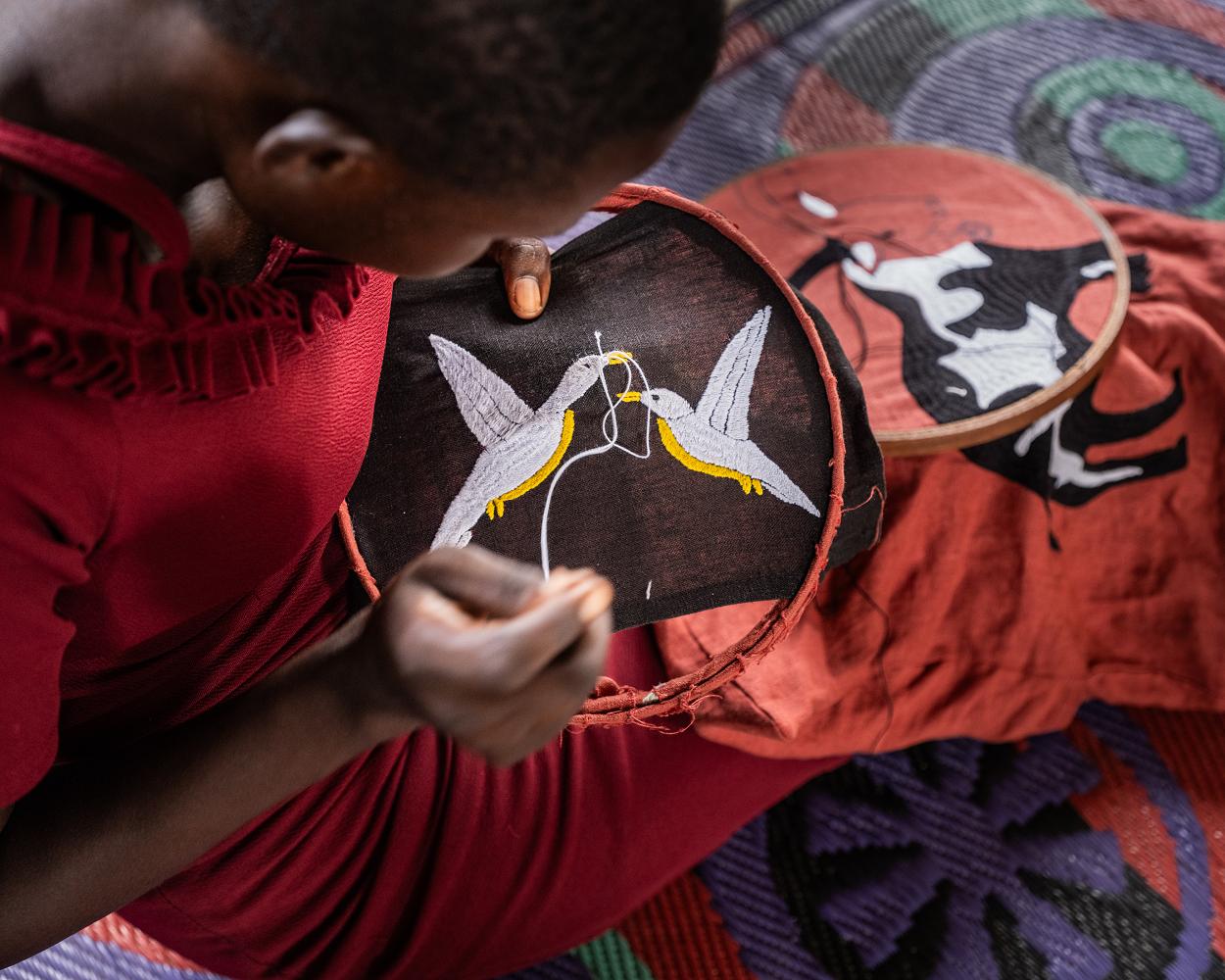
This month, we dive into the story behind Milaya Project, an inspiring artisan brand and non-profit organization that works with South Sudanese artisans living in one of the world's largest refugee camps.
The brand grew out of the shared vision of National Geographic staff writer Nina Strochlic and freelance photographer Nora Lorek. About nine years ago, Nina and Nora pitched a story to the publication about Bidibidi, the largest refugee settlement for South Sudanese people in Uganda.
War has ravaged Sudan since the 1950s, and although South Sudan gained independence in 2011, it soon fell into civil war fueled by internal power struggles. When conflict escalated again in 2016, Nina and Nora traveled there to document life in the camp.
Bidibidi is no ordinary refugee settlement. As Uganda began to see the situation as more permanent, the authorities there took progressive action, allowing refugees not only to work and gain legal status, but also to live in traditional village communities rather than semi-permanent tents. Today, the camp is home to roughly 300,000 people.
The story of Bidibidi brought Nina and Nora back to Uganda several times, and during those trips, they discovered another story unfolding alongside it: that of the artisans. They spoke with hundreds of women about what they carried as they fled. The answers were often the same: nothing, or only what was essential—often an embroidered sheet called a milaya. These stunning pieces of heritage art became a lifeline for survival for many.