
For many years, I have been traveling to Costa Rica thanks to my adventurous father and stepmother, who fell in love with the country over 20 years ago and built a home there. I remember some of our first trips exploring the country at a time when there were only dirt roads to reach the southernmost tip. WiFi was only accessible at the nearby internet shop, and there was little "entertainment," so my stepmother would have me fill an extra suitcase with books to get her through the months. Years later, new paved roads were built from San Jose down to Dominical, creating quick routes to the south and leading to some of the fastest-growing cities in the country. Costa Rica is developing quickly and becoming modernized, like many other places we see today. My father, nostalgic for the Costa Rica of 20 years ago, hems and haws over the changes.
I bring this up because, during one of my first trips years ago, I visited the Boruca community, an indigenous group living in Costa Rica. This is often a side of the country unknown to many visitors. They are one of the few communities to have held onto their land and traditions, but that too is changing. I was curious to see how they, as a community, were coping with all the changes since I last visited about 12 years ago, and how they have managed to maintain their artisan traditions, leading me to visit the reservation.
The Boruca is a community of about 2,660 people, most of whom live in Puntarenas Province – about two hours from Dominical and 6 hours from San Jose. The drive from Dominical is quite beautiful – you pass through Uvita, the fastest growing city in Costa Rica, where you begin to feel the “true” Costa Rica. It’s close to Osa, which is one of the most diverse ecological parks in the world.
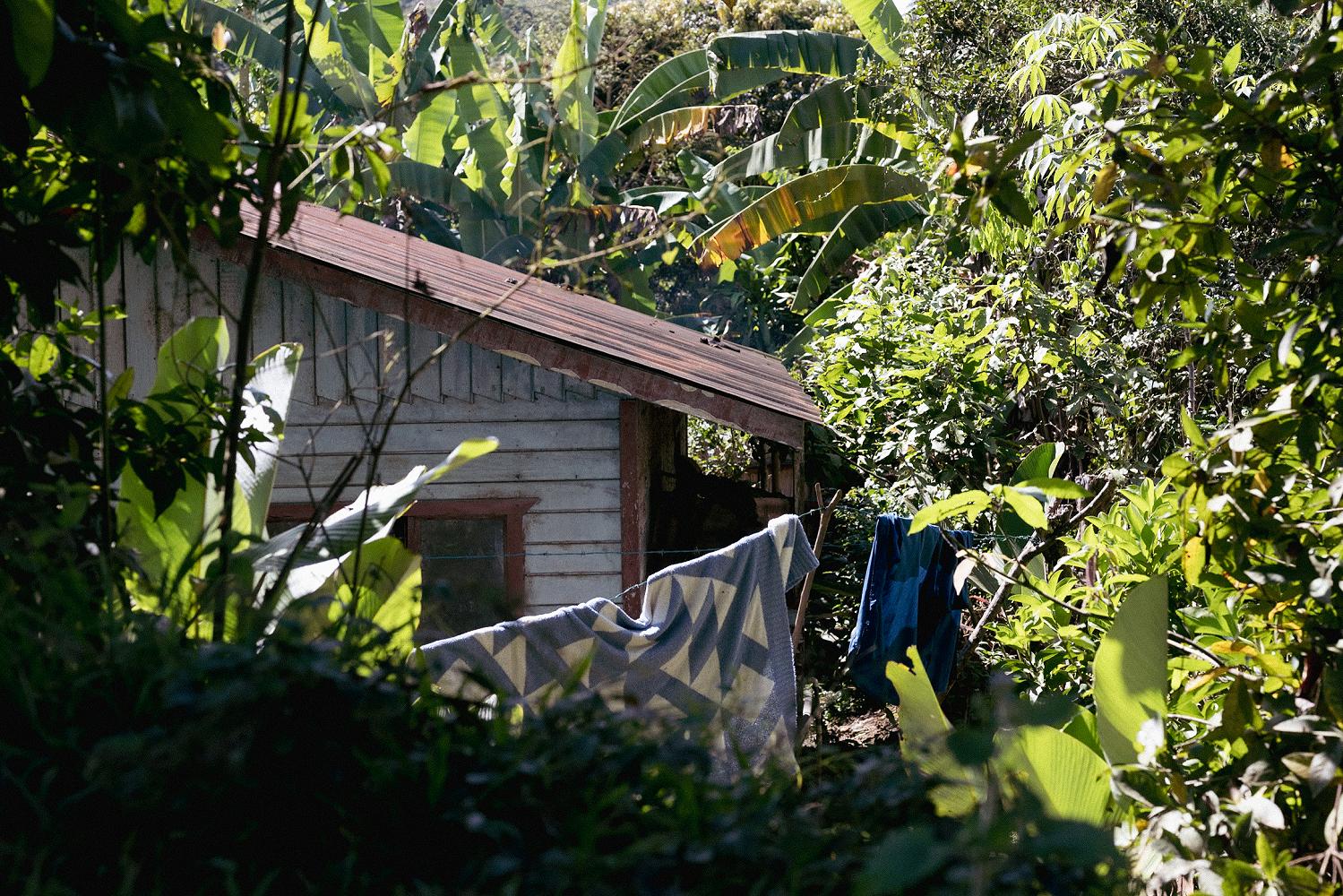
The Boruca used to be cut off from the modern world, but now, as you drive into their land in the mountains, which is open to visitors, you see modern life creeping in. I was surprised to see a small grocery store – this is a big change for a community that had always been self-sufficient, growing what they needed to eat, perhaps purchasing oil and salt, but not much else.
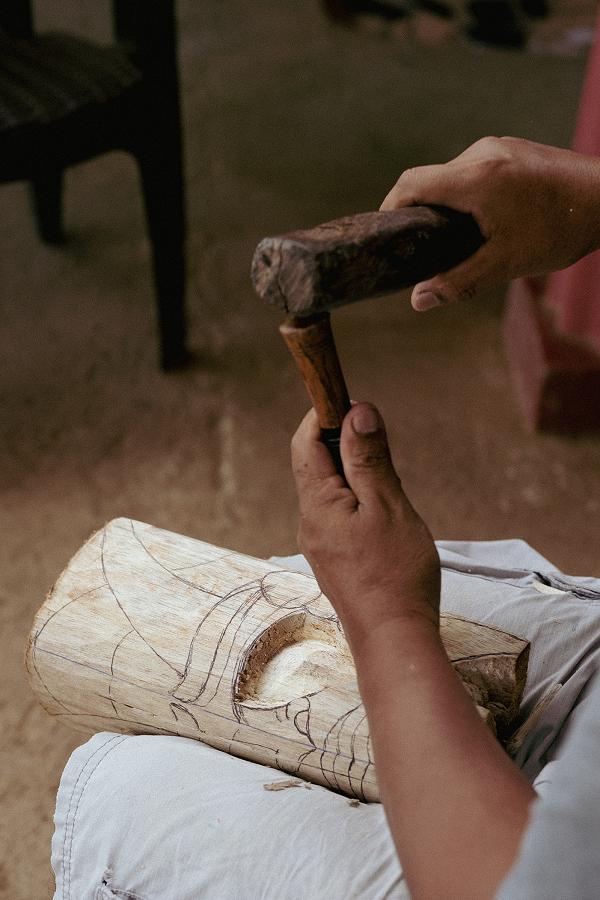
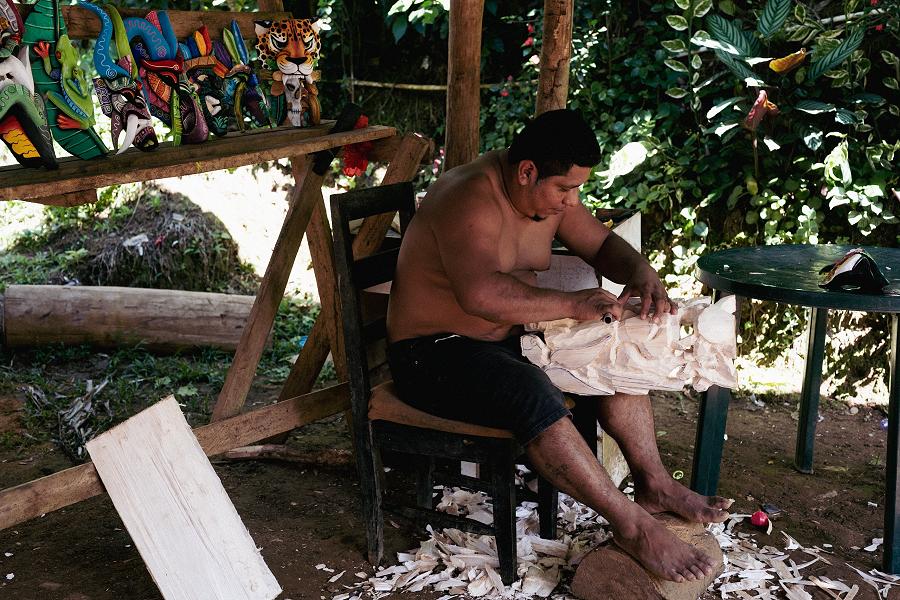
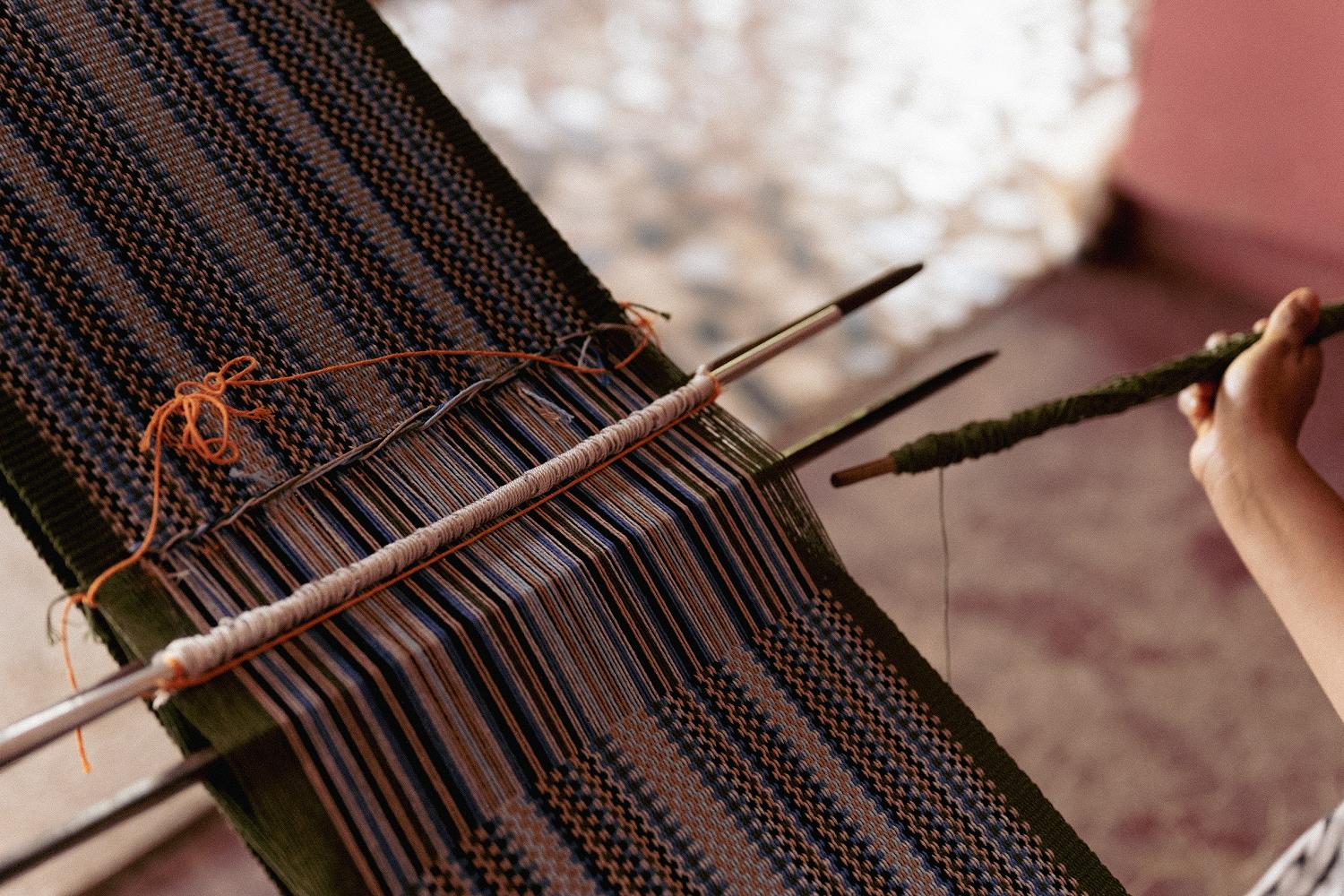
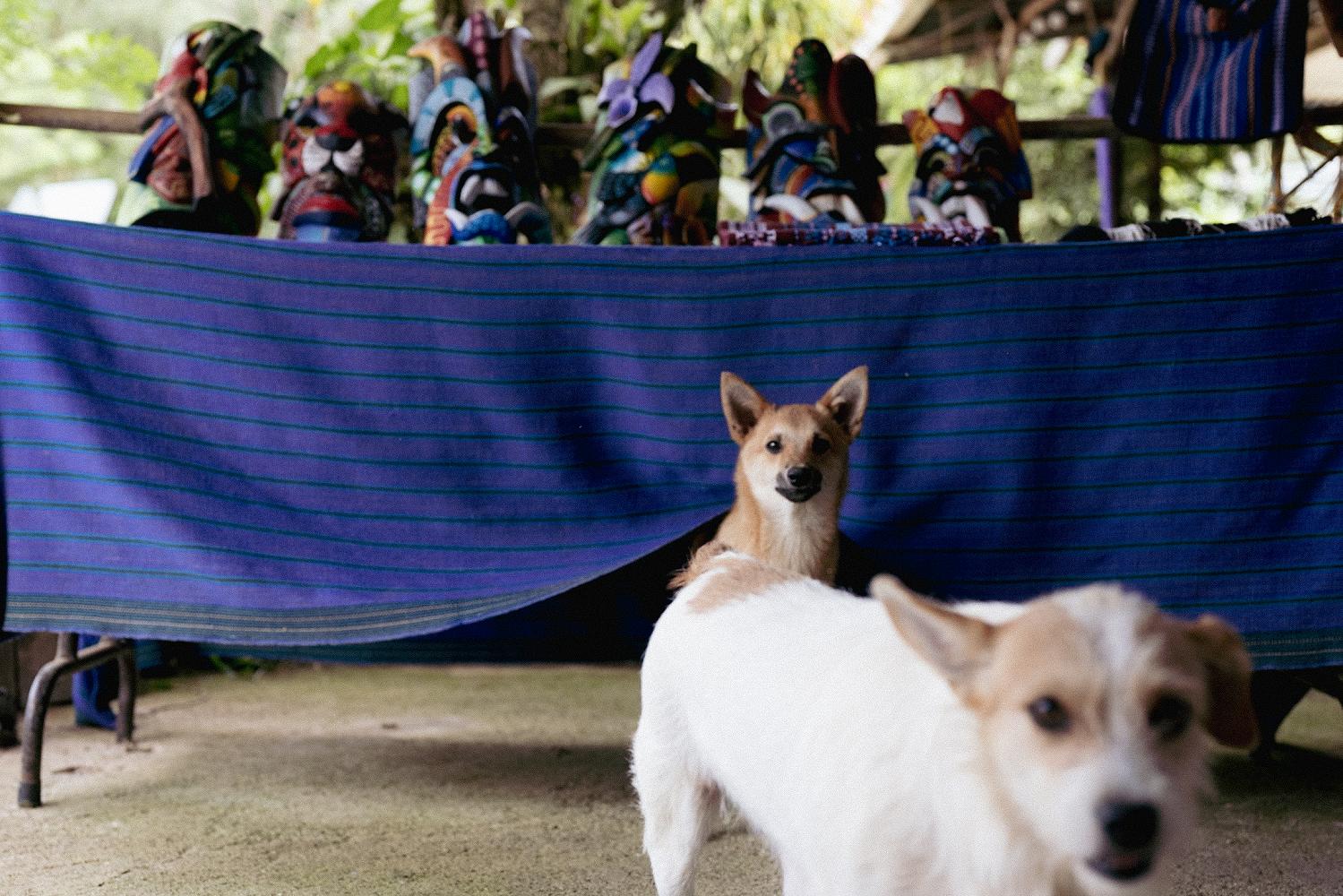
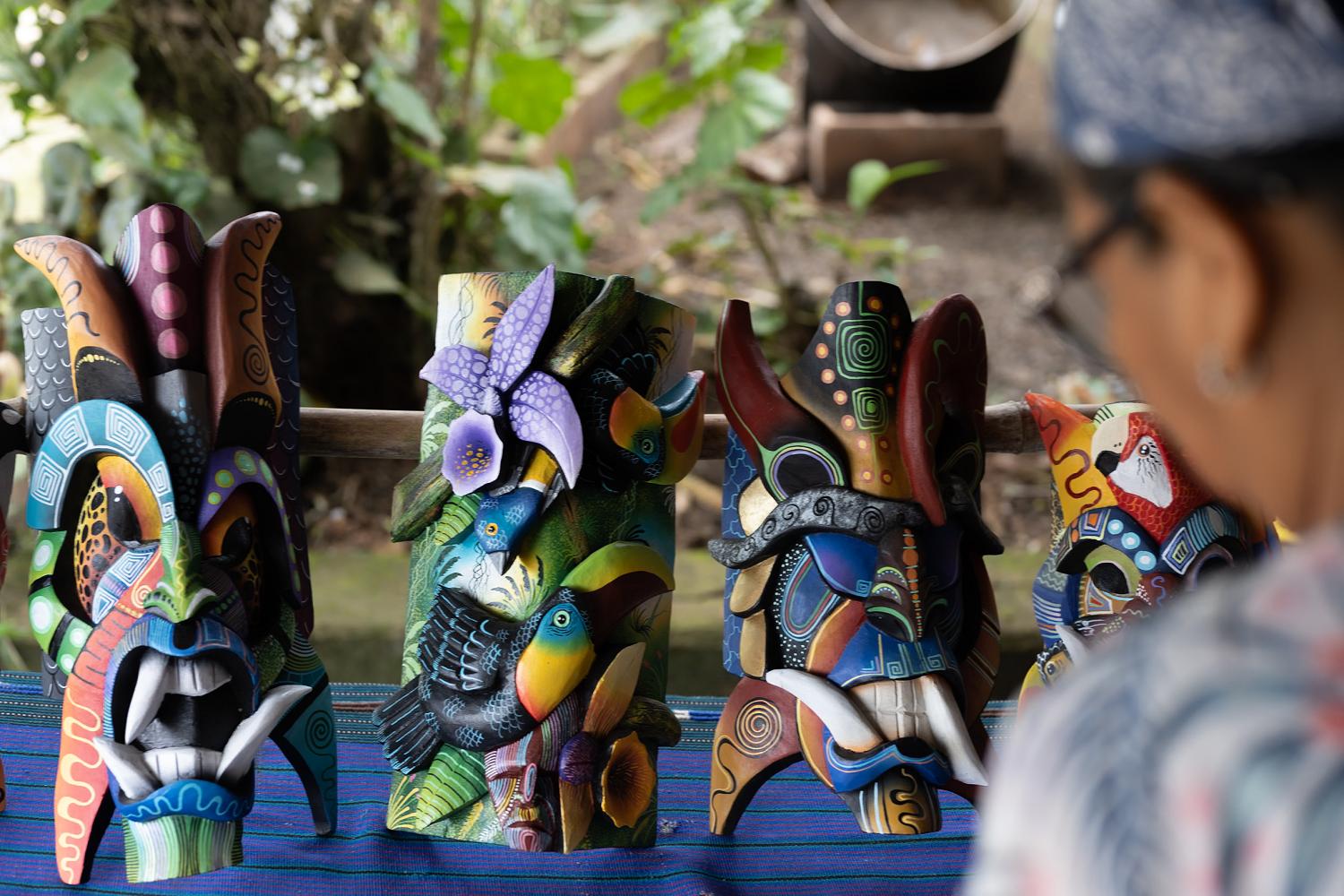
Within the village, the craftsmen specialize in two types of crafts: naturally dyed, backstrap-loomed textiles and traditional hand-carved and painted wooden masks. From what I saw, the Borucan masks are flourishing and selling well to tourists, but the traditions and production of textiles are quickly disappearing.
I spoke with my colleague Susie Atkinson about the situation among the craft industry, and she summarized it well: “The craft is fading away. Younger girls don’t want to do the backstrap loom – it’s too much on their bodies. Girls from the village would also have babies where they get extra support from the government, or go to university and get a good job. The textiles are also competing with Asia, so there is too much competition. And when it comes to ordering, it’s just not that reliable.”
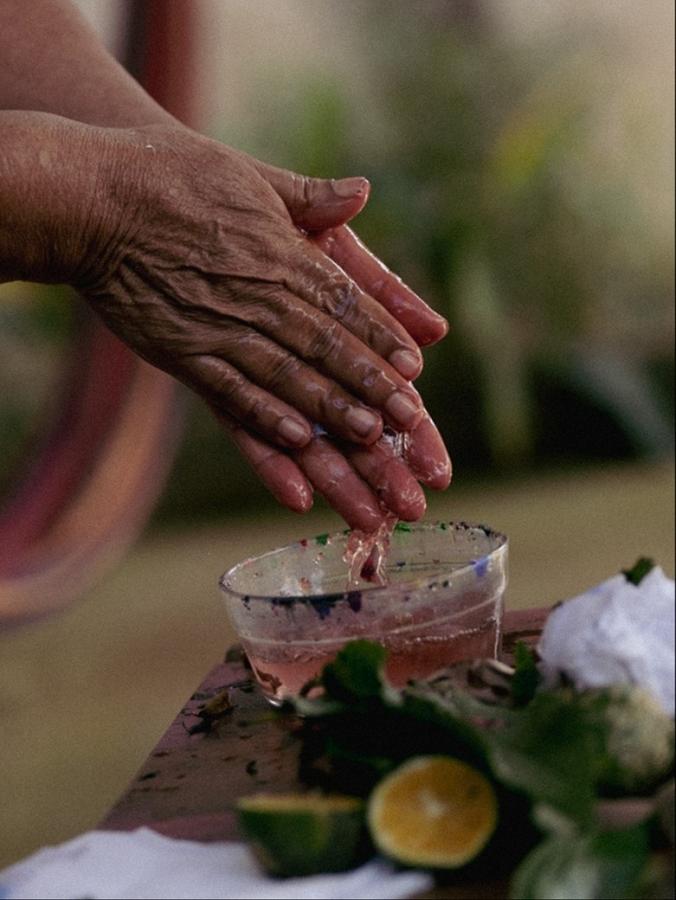
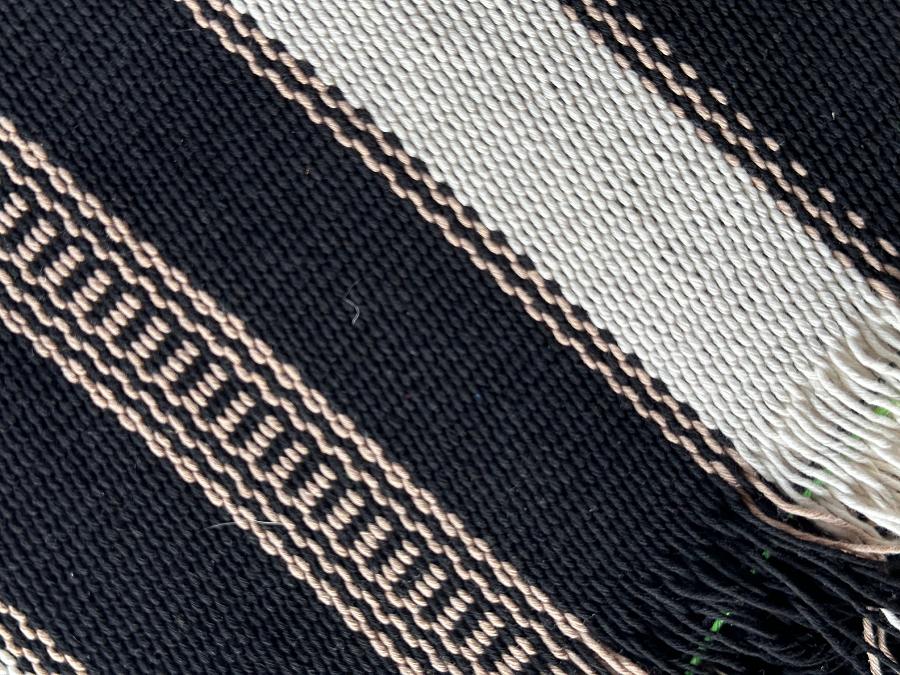
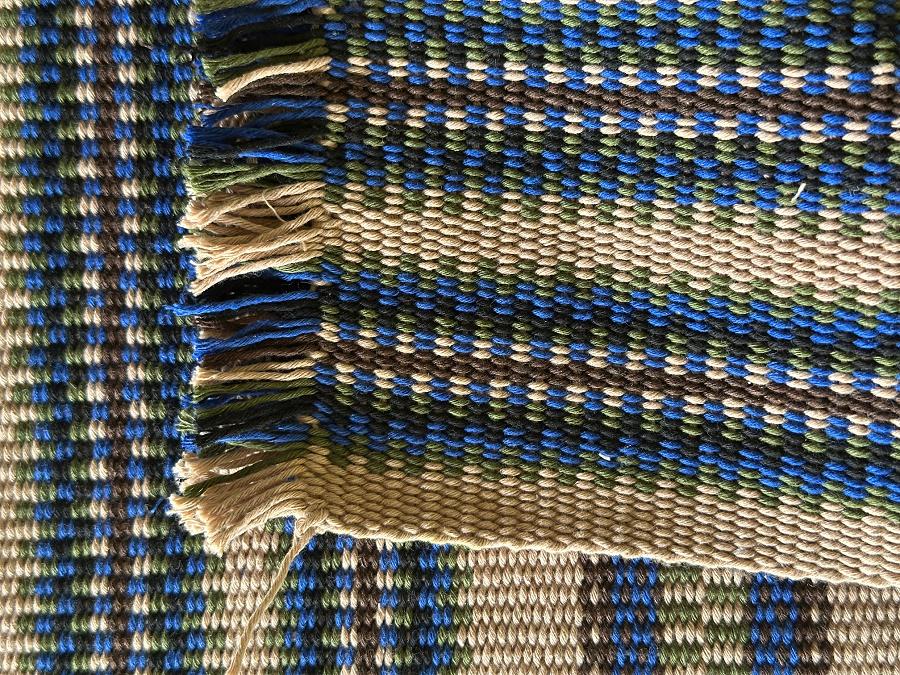
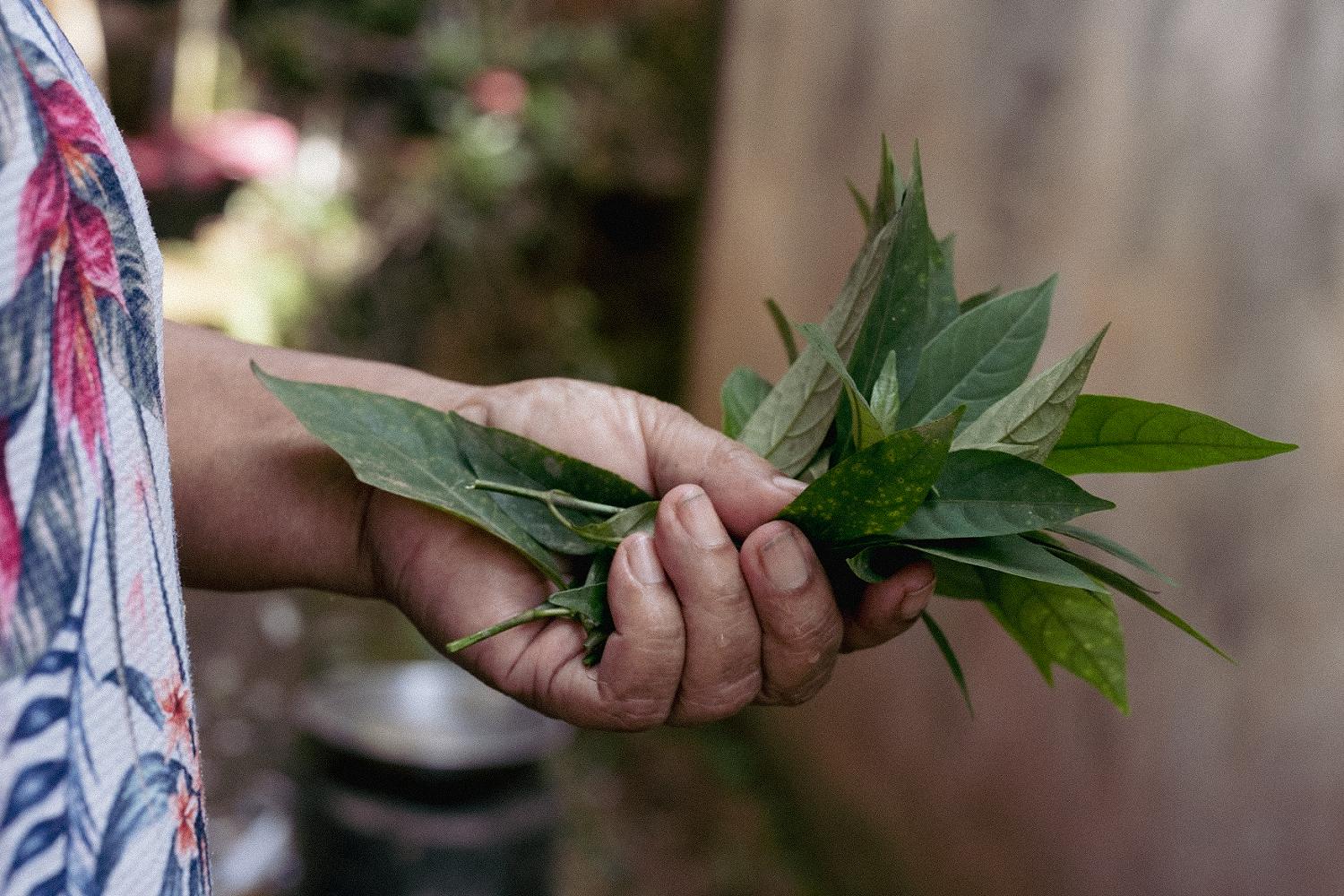
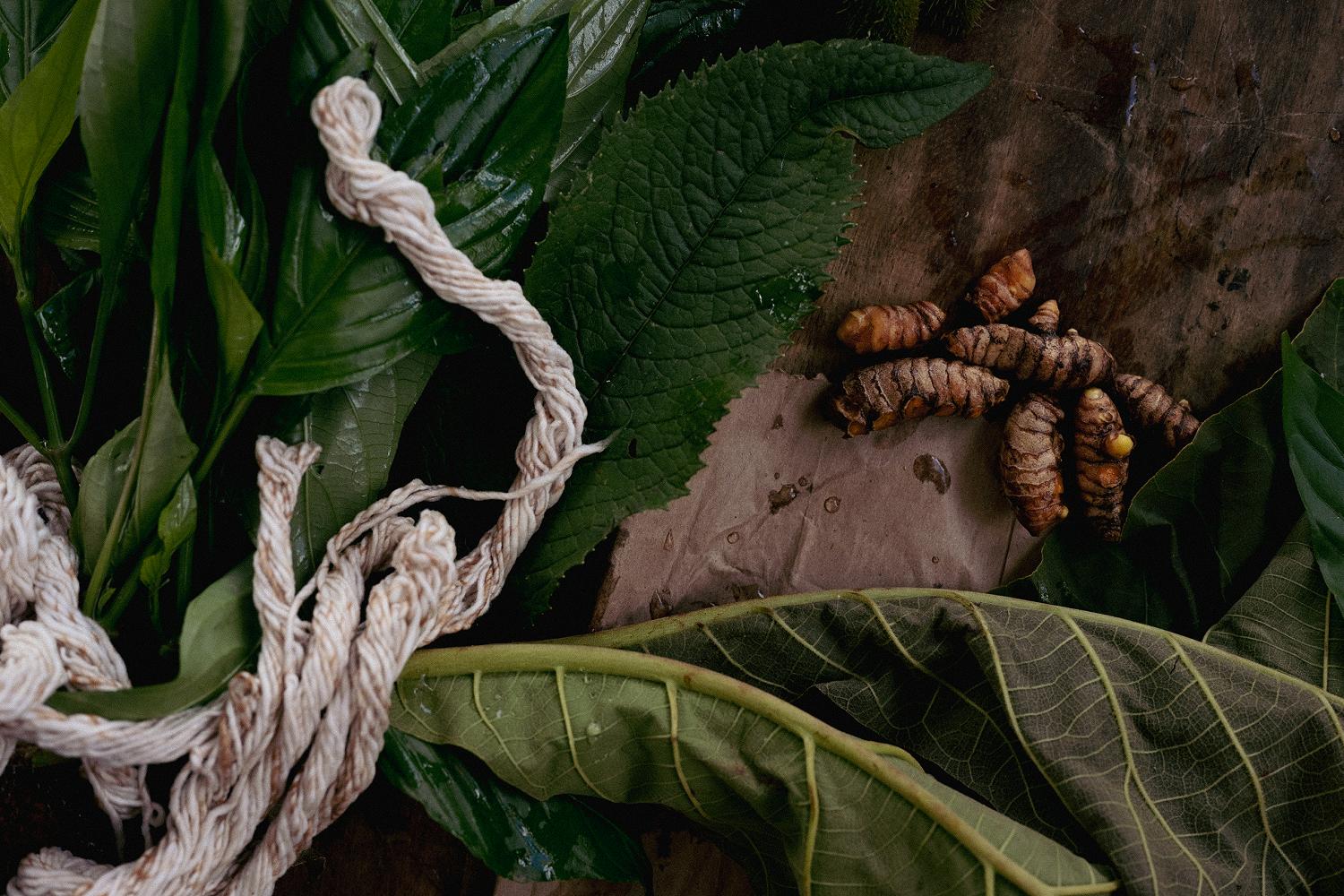
Textiles from Boruca are simple in terms of design but complex in technique. Cotton is grown and harvested on Borucan land – hand-planted, cultivated, and harvested. Trees and plants for natural plant dyes are also all cultivated on their land. Between the cotton and natural dyes, it's already time-consuming just to produce the finished materials, let alone when it comes to weaving them on a backstrap loom. The textiles are gorgeous, but I understand their challenge in the marketplace, as many people are drawn to vibrant colors. These textiles are subtle, soft, and made using a natural dye palette.
This is where design can have a strong influence, adding interest to the product and aiding in sales without changing traditional techniques. However, this requires someone extremely dedicated and patient to work with the community on color suggestions and design alterations. There is an opportunity, though, to preserve what is a dying art.
I was surprised to see only a few pieces for sale, and sadly, they were made using synthetic yarns because that's what people were asking for, as it reminds them of Guatemalan design, and it's cheaper in Guatemala. That encapsulates so much of what we should aim to avoid in our work – making one product look like another and damaging cultural identity.
Due to tourist demand, they started using pre-dyed yarns instead of dyeing white cotton themselves. This is the first step in losing tradition. Time is different these days—people used to have more time, and with modernity creeping into even the most indigenous, isolated regions, they would rather do different things with their time – and who can blame them?
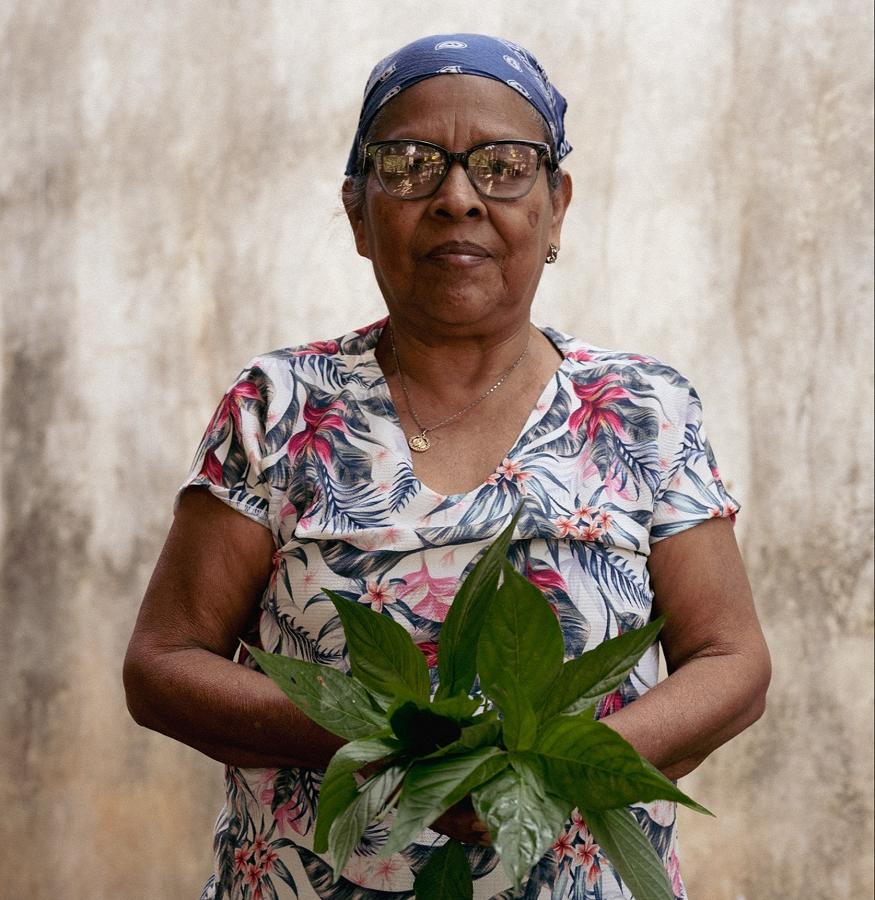
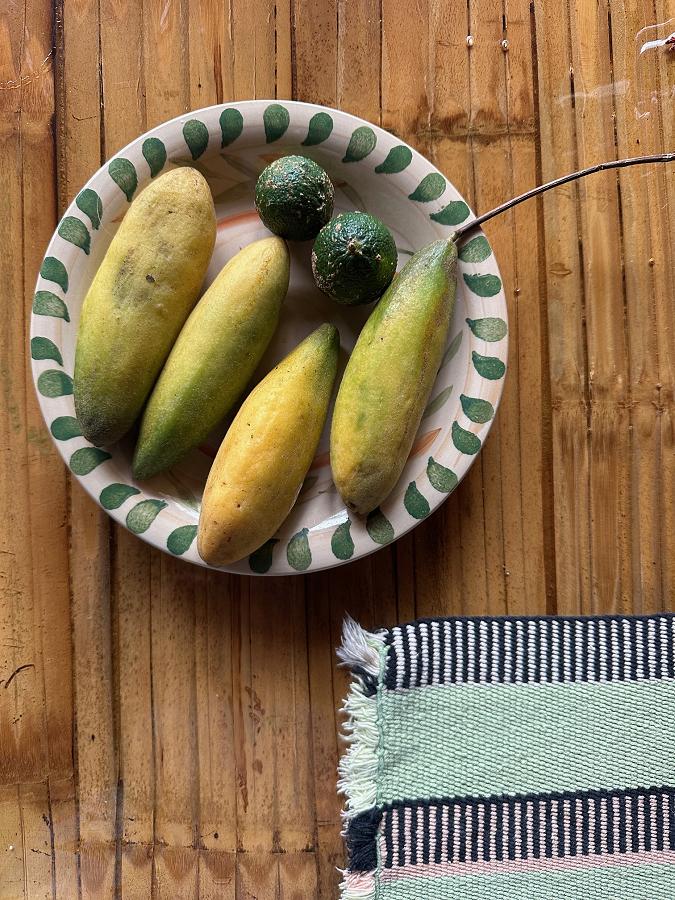
On a brighter note, you can encourage the Borucans to produce what they know and love by visiting them directly. You can visit a cooperative that demonstrates how they carve masks and hand-dye their beautiful textiles. Along with the opportunity to buy some of their heirloom pieces, you can enjoy a local homemade lunch prepared by a family – truly a memorable experience if you want to see another side of Costa Rica.
To schedule a visit, email Susie Atkinson who can coordinate your visit -